
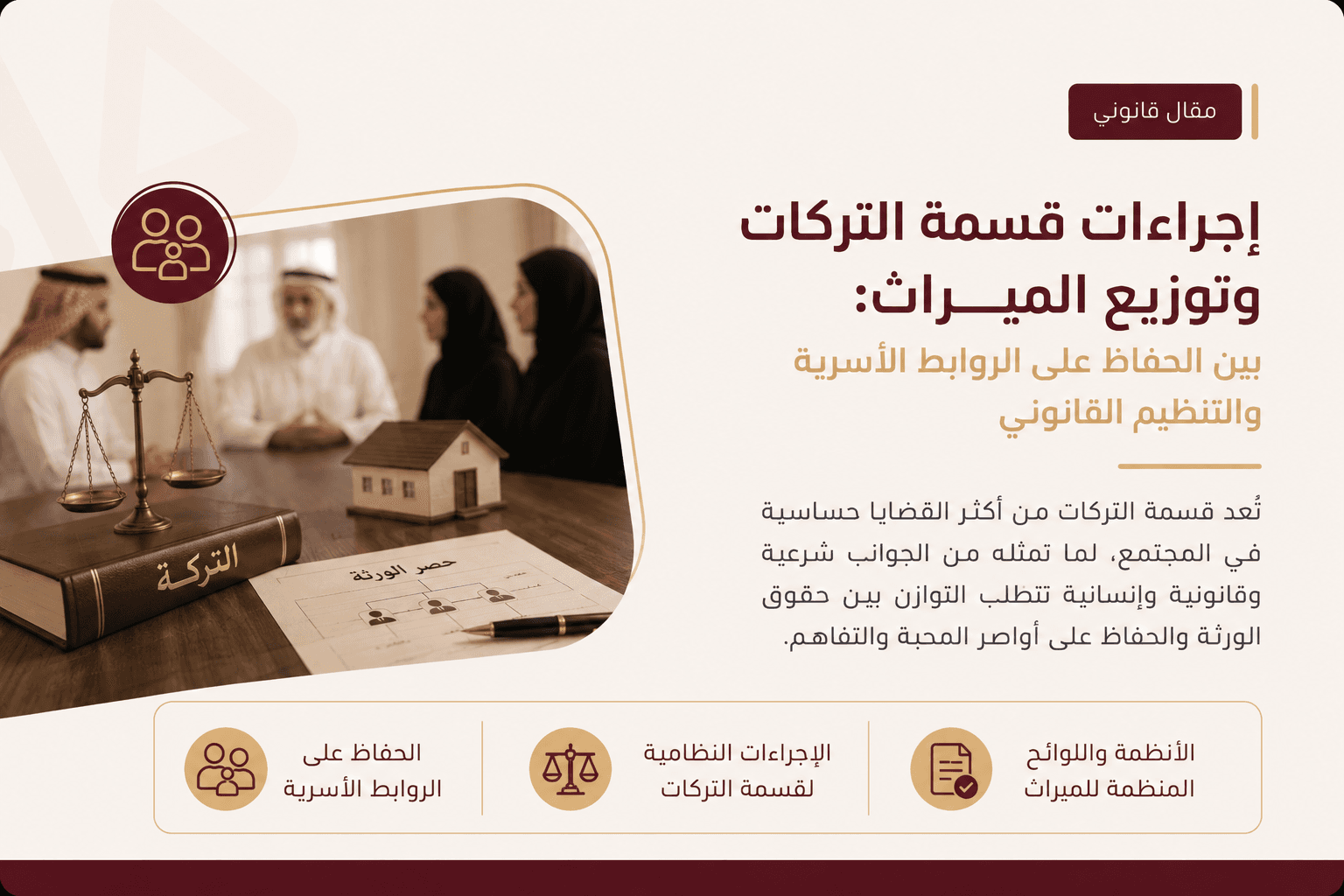
Losing a family member is a harsh human experience that leaves a deep psychological impact.
Yet, amidst this grief, there is an urgent need to handle the properties and funds left behind, legally known as the estate.
Unfortunately, we often witness family ties breaking down due to financial disputes over inheritance and mismanagement of assets.
Therefore, the Saudi system provides clear regulatory frameworks ensuring everyone receives their rights quickly and fairly.
The primary goal is not just financial distribution, but protecting the family structure and vulnerable groups like minors.
Initial Steps After Death
Before discussing money division, there are legal and religious obligations to clear the deceased's liabilities:
- Preparation Costs: Burial and preparation costs are deducted from the estate first.
- Settling Debts: The documented debts of the deceased must be paid, as debts take precedence over heirs' rights.
- Executing the Will: The will is executed if present, provided it does not exceed one-third of the estate.
Legal Procedures for Inheritance Division
After clearing liabilities, the practical steps for distributing the remainder begin:
- Heirs Deed: An official document from the Personal Status Court identifying the legitimate heirs and their exact shares.
- Asset Inventory: All cash in banks, real estate, stocks, and commercial records are officially inventoried.
- Consensual Division: The best and fastest option, where adult heirs agree amicably on distribution and document it.
- Forced Division: Resorted to during disputes or if minors are involved, where the court intervenes to auction and distribute assets.
The Saradiq Al-Hikmah law firm team offers the best legal and amicable solutions for estate division, ensuring your rights and preserving family ties.